
By Terry Fleurie, Staff Writer, Eganville Leader
Pembroke, October 21, 2026 – A growing number of low‑income seniors in Renfrew County are being forced into an impossible choice: remain in unsafe homes or stay in hospital beds they no longer need because they can’t afford the retirement housing required to keep them healthy and stable.
Imagine being a senior in the community who can no longer stay at home due to declining health and increasing needs for care, yet you don’t have the financial means to access a facility to meet those needs.
The lack of safe, affordable housing options for these seniors in Renfrew County is an ever-increasing problem and a not-for-profit organization operating two independent living complexes is hoping to raise awareness so the issue is addressed as it has reached crisis proportions.
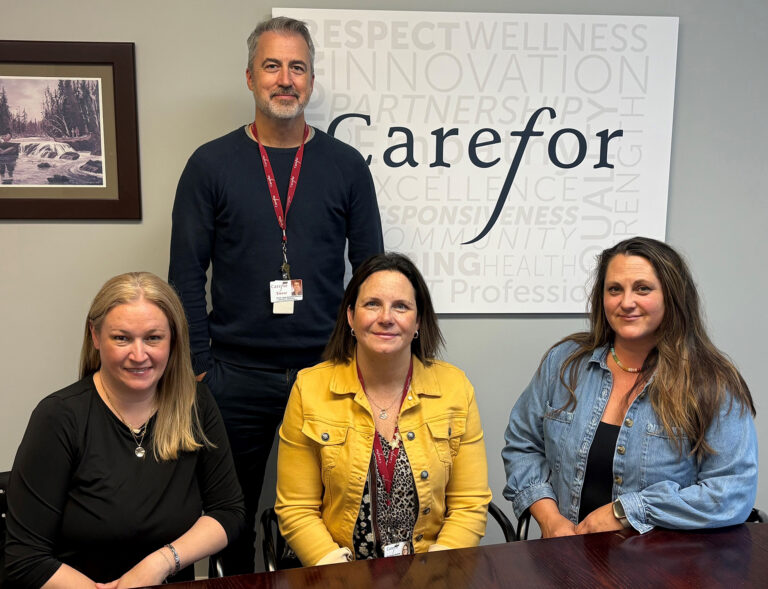
In a recent interview with the Leader, members of the administrative team from Carefor Health & Community Services cited the very serious issues they are seeing as seniors struggle to find housing that meets both their financial and healthcare needs. The result is hospital beds remain occupied by individuals who have nowhere appropriate to go, creating a rise in housing instability and hidden homelessness among seniors. The not-for-profit agency currently offers independent retirement living at two locations in Pembroke – the Civic Complex on Cecelia Street and the Mackay Centre on MacKay Street – where the personnel have been seeing the problem escalating for some time.
Emma Tibbo, the Acting CEO who joined the meeting virtually, said the situation facing the seniors is something that is becoming more prevalent each day.
“They can’t move into any sort of retirement residence because it’s so expensive, so it’s prohibitive. And then long-term care is not an option either because they’re not getting the opportunity to age gracefully in a home that actually provides them with some ability to live kind of on their own without someone hovering over them.
“I used to work in long-term care and I can tell you that it takes away a lot of their autonomy because you’re basically told when to eat, when to go to sleep, and when to wake up,” she added.
“We just can’t have our seniors, specifically our low-income seniors, having that difficult choice to make about giving up their freedom.”
Ms. Tibbo said it’s a difficult situation and it needs to be highlighted that retirement homes are great, but only if you can afford them.
Trevor Eggleton, Director of Marketing, Communications and Fundraising, said the entire population is aging, adding between 2020 and 2040 it is projected the population of seniors in the province will increase by 50 to 60 percent.
“How can we make sure now, that the investment is there to help us down the road because it’s just going to become more and more of an issue?”
Jennifer St. Cyr, Manager of Client Care, said while it has always been an issue, it became much more noticeable during and after COVID.
“And even more so now,” she said. “A resident who is on ODSP (Ontario Disability Support Program) gets a certain amount of money and then they come in here because they can no longer live at home independently and they’re looking at a retirement home. But as soon as you move into a retirement home, ODSP takes away their income for food because it’s considered room and board when you move into a retirement home.
“So right there from the get-go, if you were making $1300 (per month), you’re now making $900,” she added. “And you can’t move into a retirement home at $900. We are the cheapest retirement home around.”
One-Third of People Cannot Afford Rent
Ms. St. Cyr said the shared rooms are $1700 a month and there are still people who cannot afford that.
“It’s heartbreaking,” she remarked.
Mr. Eggleton said approximately one-third of the people they see cannot afford it.
“A lot of the people we see are not coming to us by choice,” he explained. “They’re coming with a hospital or doctor referral.”
He said the hospitals are contacting them because they need the beds.
“We can’t take them and maybe they’re at a place where we could help them in terms of their physical abilities. We can’t take them because we can’t take a $700 or $800 a month cut.”
Janna Wood, Manager of Retirement Living Operations, noted pensions have increased 20 percent, while the cost of groceries has escalated by 30 percent.
“And then you have taxes and gas,” she remarked. “Our property taxes just went up hugely, so when you’re tight to the line as it is and things just keep going up, up, up, it gets unsustainable.
“So we’re working towards awareness and this has many folds to it,” she added. “Awareness for the government, awareness in our campaigns to tell the public this is what we’re raising money for.”
Ms. Wood said they are looking to develop things like a subsidy fund for people who are close financially but need a little bit of help each month.
“So when we say donate to Carefor, people will know these are the types of things we are aiming to do, among other things,” she stated.
She reiterated COVID really caused an increase to the problem.
“COVID kept people inside for so long and we anticipated, not just us, but all of healthcare, it’s a tsunami of sorts, so we’re living it now. People are very unwell, mentally and physically”
She said people didn’t go to see their family doctors for three years, or they developed cancer or a circle of other issues.
“People have a right to live at risk, but some people don’t want to,” she stated. “Things change in their lives, they lose a partner, and all of a sudden they have this house to look after and they can’t maintain it.”
“They’ve cared for people, now it’s time for us to care for them,” she added.
Ms. St. Cyr said in some instances the senior will move in with one of their children, but then it gets to a point where it’s no longer safe because they’re getting up at night, etc. so it’s time to go on a long-term care list.
“To get into long-term care is years in the making,” she noted. “It’s six or seven years now to get into long-term care.”
Mr. Eggleton pointed out some caregivers may not access all the services that exist in the community to assist with caregiving to help better prepare the person for long-term care.
“Resources in the community, whether they be us or anybody else that exist need to be funded in a way that ensures the viability, and ensures that the resources are strong – it’s not only going to help clients, it’s going to help the community.”
He stressed because the current system is not working, hospital beds are full.
Ms. Tibbo said when staff have to turn down someone’s application, it is not taken lightly.
“It’s not just water off a duck’s back by any means, it deeply impacts the team.” she said.
“And we do so much gap filling,” Ms. St. Cyr noted. “We’re just trying to get people out of hospital beds and get people out of unsafe home environments and get them into a safe space.”
She stressed clients need to be mobile or if they are in a wheelchair, they must be able to self-transfer.
“We do not have the staff, the funding, the resources that long-term care has, and that is a misconception,” she stated.
“It’s a staffing issue,” Mr. Eggleton added
Ms. Tibbo stressed the provincial government announced funding for community care last year, however it’s not what it appears to be in print. While it increased the volumes available, the problem remains one can’t accept clients if they don’t have the staff to support them.
“Community care is exceptionally hard on our staff, it’s exceptionally underpaid, and we can’t increase our capacity to accept those volumes unless we can recruit staff with a salary that is equal or close to that of long-term care.
“We need to be able to provide our staff with a living wage,” she added.
Time To Go Back To Basics
When asked how she thinks the problem can be fixed, Ms. Tibbo said it’s time to clean the slate.
“It’s sort of the perfect storm, the pandemic really hit healthcare hard. We have to decide what our focus is going to be – is our focus going to be to keep them at home as long as we can, or is it going to be ensuring that the people who need the care get the care, and how do we do that without a level playing field because not-for-profit can no longer compete with for-profit.
“It’s time to go back to basics,” she added. “We need to look at the whole system.”
Other Statistics
Mr. Eggleton provided some other supporting facts that are all components of the serious problem that exists.
According to the National Institute on Ageing’s 2025 Ageing in Canada survey, 22% of Canadians aged 50 and older reported having retirement savings of $5,000 or less. In Renfrew County, food insecurity has increased dramatically, rising from approximately one in six households in 2023 to nearly one in three in 2025. Since 2001, food prices have increased by an estimated 27% to 31%, while public pension benefits have risen by only 17% to 21%. Seniors aged 65 and older represent 23.2 % of Renfrew County’ population, compared to 19% nationally.
Lack of safe, affordable housing for seniors is creating crisis
By Terry Fleurie
Staff Writer
Pembroke – A growing number of low‑income seniors in Renfrew County are being forced into an impossible choice: remain in unsafe homes or stay in hospital beds they no longer need because they can’t afford the retirement housing required to keep them healthy and stable.
Imagine being a senior in the community who can no longer stay at home due to declining health and increasing needs for care, yet you don’t have the financial means to access a facility to meet those needs.
The lack of safe, affordable housing options for these seniors in Renfrew County is an ever-increasing problem and a not-for-profit organization operating two independent living complexes is hoping to raise awareness so the issue is addressed as it has reached crisis proportions.
In a recent interview with the Leader, members of the administrative team from Carefor Health & Community Services cited the very serious issues they are seeing as seniors struggle to find housing that meets both their financial and healthcare needs. The result is hospital beds remain occupied by individuals who have nowhere appropriate to go, creating a rise in housing instability and hidden homelessness among seniors. The not-for-profit agency currently offers independent retirement living at two locations in Pembroke – the Civic Complex on Cecelia Street and the Mackay Centre on MacKay Street – where the personnel have been seeing the problem escalating for some time.
Emma Tibbo, the Acting CEO who joined the meeting virtually, said the situation facing the seniors is something that is becoming more prevalent each day.
“They can’t move into any sort of retirement residence because it’s so expensive, so it’s prohibitive. And then long-term care is not an option either because they’re not getting the opportunity to age gracefully in a home that actually provides them with some ability to live kind of on their own without someone hovering over them.
“I used to work in long-term care and I can tell you that it takes away a lot of their autonomy because you’re basically told when to eat, when to go to sleep, and when to wake up,” she added.
“We just can’t have our seniors, specifically our low-income seniors, having that difficult choice to make about giving up their freedom.”
Ms. Tibbo said it’s a difficult situation and it needs to be highlighted that retirement homes are great, but only if you can afford them.
Trevor Eggleton, Director of Marketing, Communications and Fundraising, said the entire population is aging, adding between 2020 and 2040 it is projected the population of seniors in the province will increase by 50 to 60 percent.
“How can we make sure now, that the investment is there to help us down the road because it’s just going to become more and more of an issue?”
Jennifer St. Cyr, Manager of Client Care, said while it has always been an issue, it became much more noticeable during and after COVID.
“And even more so now,” she said. “A resident who is on ODSP (Ontario Disability Support Program) gets a certain amount of money and then they come in here because they can no longer live at home independently and they’re looking at a retirement home. But as soon as you move into a retirement home, ODSP takes away their income for food because it’s considered room and board when you move into a retirement home.
“So right there from the get-go, if you were making $1300 (per month), you’re now making $900,” she added. “And you can’t move into a retirement home at $900. We are the cheapest retirement home around.”
One-Third of People Cannot Afford Rent
Ms. St. Cyr said the shared rooms are $1700 a month and there are still people who cannot afford that.
“It’s heartbreaking,” she remarked.
Mr. Eggleton said approximately one-third of the people they see cannot afford it.
“A lot of the people we see are not coming to us by choice,” he explained. “They’re coming with a hospital or doctor referral.”
He said the hospitals are contacting them because they need the beds.
“We can’t take them and maybe they’re at a place where we could help them in terms of their physical abilities. We can’t take them because we can’t take a $700 or $800 a month cut.”
Janna Wood, Manager of Retirement Living Operations, noted pensions have increased 20 percent, while the cost of groceries has escalated by 30 percent.
“And then you have taxes and gas,” she remarked. “Our property taxes just went up hugely, so when you’re tight to the line as it is and things just keep going up, up, up, it gets unsustainable.
“So we’re working towards awareness and this has many folds to it,” she added. “Awareness for the government, awareness in our campaigns to tell the public this is what we’re raising money for.”
Ms. Wood said they are looking to develop things like a subsidy fund for people who are close financially but need a little bit of help each month.
“So when we say donate to Carefor, people will know these are the types of things we are aiming to do, among other things,” she stated.
She reiterated COVID really caused an increase to the problem.
“COVID kept people inside for so long and we anticipated, not just us, but all of healthcare, it’s a tsunami of sorts, so we’re living it now. People are very unwell, mentally and physically”
She said people didn’t go to see their family doctors for three years, or they developed cancer or a circle of other issues.
“People have a right to live at risk, but some people don’t want to,” she stated. “Things change in their lives, they lose a partner, and all of a sudden they have this house to look after and they can’t maintain it.”
“They’ve cared for people, now it’s time for us to care for them,” she added.
Ms. St. Cyr said in some instances the senior will move in with one of their children, but then it gets to a point where it’s no longer safe because they’re getting up at night, etc. so it’s time to go on a long-term care list.
“To get into long-term care is years in the making,” she noted. “It’s six or seven years now to get into long-term care.”
Mr. Eggleton pointed out some caregivers may not access all the services that exist in the community to assist with caregiving to help better prepare the person for long-term care.
“Resources in the community, whether they be us or anybody else that exist need to be funded in a way that ensures the viability, and ensures that the resources are strong – it’s not only going to help clients, it’s going to help the community.”
He stressed because the current system is not working, hospital beds are full.
Ms. Tibbo said when staff have to turn down someone’s application, it is not taken lightly.
“It’s not just water off a duck’s back by any means, it deeply impacts the team.” she said.
“And we do so much gap filling,” Ms. St. Cyr noted. “We’re just trying to get people out of hospital beds and get people out of unsafe home environments and get them into a safe space.”
She stressed clients need to be mobile or if they are in a wheelchair, they must be able to self-transfer.
“We do not have the staff, the funding, the resources that long-term care has, and that is a misconception,” she stated.
“It’s a staffing issue,” Mr. Eggleton added
Ms. Tibbo stressed the provincial government announced funding for community care last year, however it’s not what it appears to be in print. While it increased the volumes available, the problem remains one can’t accept clients if they don’t have the staff to support them.
“Community care is exceptionally hard on our staff, it’s exceptionally underpaid, and we can’t increase our capacity to accept those volumes unless we can recruit staff with a salary that is equal or close to that of long-term care.
“We need to be able to provide our staff with a living wage,” she added.
Time To Go Back To Basics
When asked how she thinks the problem can be fixed, Ms. Tibbo said it’s time to clean the slate.
“It’s sort of the perfect storm, the pandemic really hit healthcare hard. We have to decide what our focus is going to be – is our focus going to be to keep them at home as long as we can, or is it going to be ensuring that the people who need the care get the care, and how do we do that without a level playing field because not-for-profit can no longer compete with for-profit.
“It’s time to go back to basics,” she added. “We need to look at the whole system.”
Other Statistics
Mr. Eggleton provided some other supporting facts that are all components of the serious problem that exists.
According to the National Institute on Ageing’s 2025 Ageing in Canada survey, 22% of Canadians aged 50 and older reported having retirement savings of $5,000 or less. In Renfrew County, food insecurity has increased dramatically, rising from approximately one in six households in 2023 to nearly one in three in 2025. Since 2001, food prices have increased by an estimated 27% to 31%, while public pension benefits have risen by only 17% to 21%. Seniors aged 65 and older represent 23.2 % of Renfrew County’ population, compared to 19% nationally.