
By Terry Fleurie, Staff Writer, Eganville Leader
Pembroke, October 21, 2026 – A growing number of low‑income seniors in Renfrew County are being forced into an impossible choice: remain in unsafe homes or stay in hospital beds they no longer need because they can’t afford the retirement housing required to keep them healthy and stable.
Imagine being a senior in the community who can no longer stay at home due to declining health and increasing needs for care, yet you don’t have the financial means to access a facility to meet those needs.
The lack of safe, affordable housing options for these seniors in Renfrew County is an ever-increasing problem and a not-for-profit organization operating two independent living complexes is hoping to raise awareness so the issue is addressed as it has reached crisis proportions.
In a recent interview with the Leader, members of the administrative team from Carefor Health & Community Services cited the very serious issues they are seeing as seniors struggle to find housing that meets both their financial and healthcare needs. The result is hospital beds remain occupied by individuals who have nowhere appropriate to go, creating a rise in housing instability and hidden homelessness among seniors. The not-for-profit agency currently offers independent retirement living at two locations in Pembroke – the Civic Complex on Cecelia Street and the Mackay Centre on MacKay Street – where the personnel have been seeing the problem escalating for some time.
Emma Tibbo, the Acting CEO who joined the meeting virtually, said the situation facing the seniors is something that is becoming more prevalent each day.
“They can’t move into any sort of retirement residence because it’s so expensive, so it’s prohibitive. And then long-term care is not an option either because they’re not getting the opportunity to age gracefully in a home that actually provides them with some ability to live kind of on their own without someone hovering over them.
“I used to work in long-term care and I can tell you that it takes away a lot of their autonomy because you’re basically told when to eat, when to go to sleep, and when to wake up,” she added.
“We just can’t have our seniors, specifically our low-income seniors, having that difficult choice to make about giving up their freedom.”
Ms. Tibbo said it’s a difficult situation and it needs to be highlighted that retirement homes are great, but only if you can afford them.
Trevor Eggleton, Director of Marketing, Communications and Fundraising, said the entire population is aging, adding between 2020 and 2040 it is projected the population of seniors in the province will increase by 50 to 60 percent.
“How can we make sure now, that the investment is there to help us down the road because it’s just going to become more and more of an issue?”
Jennifer St. Cyr, Manager of Client Care, said while it has always been an issue, it became much more noticeable during and after COVID.
“And even more so now,” she said. “A resident who is on ODSP (Ontario Disability Support Program) gets a certain amount of money and then they come in here because they can no longer live at home independently and they’re looking at a retirement home. But as soon as you move into a retirement home, ODSP takes away their income for food because it’s considered room and board when you move into a retirement home.
“So right there from the get-go, if you were making $1300 (per month), you’re now making $900,” she added. “And you can’t move into a retirement home at $900. We are the cheapest retirement home around.”
One-Third of People Cannot Afford Rent
Ms. St. Cyr said the shared rooms are $1700 a month and there are still people who cannot afford that.
“It’s heartbreaking,” she remarked.
Mr. Eggleton said approximately one-third of the people they see cannot afford it.
“A lot of the people we see are not coming to us by choice,” he explained. “They’re coming with a hospital or doctor referral.”
He said the hospitals are contacting them because they need the beds.
“We can’t take them and maybe they’re at a place where we could help them in terms of their physical abilities. We can’t take them because we can’t take a $700 or $800 a month cut.”
Janna Wood, Manager of Retirement Living Operations, noted pensions have increased 20 percent, while the cost of groceries has escalated by 30 percent.
“And then you have taxes and gas,” she remarked. “Our property taxes just went up hugely, so when you’re tight to the line as it is and things just keep going up, up, up, it gets unsustainable.
“So we’re working towards awareness and this has many folds to it,” she added. “Awareness for the government, awareness in our campaigns to tell the public this is what we’re raising money for.”
Ms. Wood said they are looking to develop things like a subsidy fund for people who are close financially but need a little bit of help each month.
“So when we say donate to Carefor, people will know these are the types of things we are aiming to do, among other things,” she stated.
She reiterated COVID really caused an increase to the problem.
“COVID kept people inside for so long and we anticipated, not just us, but all of healthcare, it’s a tsunami of sorts, so we’re living it now. People are very unwell, mentally and physically”
She said people didn’t go to see their family doctors for three years, or they developed cancer or a circle of other issues.
“People have a right to live at risk, but some people don’t want to,” she stated. “Things change in their lives, they lose a partner, and all of a sudden they have this house to look after and they can’t maintain it.”
“They’ve cared for people, now it’s time for us to care for them,” she added.
Ms. St. Cyr said in some instances the senior will move in with one of their children, but then it gets to a point where it’s no longer safe because they’re getting up at night, etc. so it’s time to go on a long-term care list.
“To get into long-term care is years in the making,” she noted. “It’s six or seven years now to get into long-term care.”
Mr. Eggleton pointed out some caregivers may not access all the services that exist in the community to assist with caregiving to help better prepare the person for long-term care.
“Resources in the community, whether they be us or anybody else that exist need to be funded in a way that ensures the viability, and ensures that the resources are strong – it’s not only going to help clients, it’s going to help the community.”
He stressed because the current system is not working, hospital beds are full.
Ms. Tibbo said when staff have to turn down someone’s application, it is not taken lightly.
“It’s not just water off a duck’s back by any means, it deeply impacts the team.” she said.
“And we do so much gap filling,” Ms. St. Cyr noted. “We’re just trying to get people out of hospital beds and get people out of unsafe home environments and get them into a safe space.”
She stressed clients need to be mobile or if they are in a wheelchair, they must be able to self-transfer.
“We do not have the staff, the funding, the resources that long-term care has, and that is a misconception,” she stated.
“It’s a staffing issue,” Mr. Eggleton added
Ms. Tibbo stressed the provincial government announced funding for community care last year, however it’s not what it appears to be in print. While it increased the volumes available, the problem remains one can’t accept clients if they don’t have the staff to support them.
“Community care is exceptionally hard on our staff, it’s exceptionally underpaid, and we can’t increase our capacity to accept those volumes unless we can recruit staff with a salary that is equal or close to that of long-term care.
“We need to be able to provide our staff with a living wage,” she added.
Time To Go Back To Basics
When asked how she thinks the problem can be fixed, Ms. Tibbo said it’s time to clean the slate.
“It’s sort of the perfect storm, the pandemic really hit healthcare hard. We have to decide what our focus is going to be – is our focus going to be to keep them at home as long as we can, or is it going to be ensuring that the people who need the care get the care, and how do we do that without a level playing field because not-for-profit can no longer compete with for-profit.
“It’s time to go back to basics,” she added. “We need to look at the whole system.”
Other Statistics
Mr. Eggleton provided some other supporting facts that are all components of the serious problem that exists.
According to the National Institute on Ageing’s 2025 Ageing in Canada survey, 22% of Canadians aged 50 and older reported having retirement savings of $5,000 or less. In Renfrew County, food insecurity has increased dramatically, rising from approximately one in six households in 2023 to nearly one in three in 2025. Since 2001, food prices have increased by an estimated 27% to 31%, while public pension benefits have risen by only 17% to 21%. Seniors aged 65 and older represent 23.2 % of Renfrew County’ population, compared to 19% nationally.
Lack of safe, affordable housing for seniors is creating crisis
By Terry Fleurie
Staff Writer
Pembroke – A growing number of low‑income seniors in Renfrew County are being forced into an impossible choice: remain in unsafe homes or stay in hospital beds they no longer need because they can’t afford the retirement housing required to keep them healthy and stable.
Imagine being a senior in the community who can no longer stay at home due to declining health and increasing needs for care, yet you don’t have the financial means to access a facility to meet those needs.
The lack of safe, affordable housing options for these seniors in Renfrew County is an ever-increasing problem and a not-for-profit organization operating two independent living complexes is hoping to raise awareness so the issue is addressed as it has reached crisis proportions.
In a recent interview with the Leader, members of the administrative team from Carefor Health & Community Services cited the very serious issues they are seeing as seniors struggle to find housing that meets both their financial and healthcare needs. The result is hospital beds remain occupied by individuals who have nowhere appropriate to go, creating a rise in housing instability and hidden homelessness among seniors. The not-for-profit agency currently offers independent retirement living at two locations in Pembroke – the Civic Complex on Cecelia Street and the Mackay Centre on MacKay Street – where the personnel have been seeing the problem escalating for some time.
Emma Tibbo, the Acting CEO who joined the meeting virtually, said the situation facing the seniors is something that is becoming more prevalent each day.
“They can’t move into any sort of retirement residence because it’s so expensive, so it’s prohibitive. And then long-term care is not an option either because they’re not getting the opportunity to age gracefully in a home that actually provides them with some ability to live kind of on their own without someone hovering over them.
“I used to work in long-term care and I can tell you that it takes away a lot of their autonomy because you’re basically told when to eat, when to go to sleep, and when to wake up,” she added.
“We just can’t have our seniors, specifically our low-income seniors, having that difficult choice to make about giving up their freedom.”
Ms. Tibbo said it’s a difficult situation and it needs to be highlighted that retirement homes are great, but only if you can afford them.
Trevor Eggleton, Director of Marketing, Communications and Fundraising, said the entire population is aging, adding between 2020 and 2040 it is projected the population of seniors in the province will increase by 50 to 60 percent.
“How can we make sure now, that the investment is there to help us down the road because it’s just going to become more and more of an issue?”
Jennifer St. Cyr, Manager of Client Care, said while it has always been an issue, it became much more noticeable during and after COVID.
“And even more so now,” she said. “A resident who is on ODSP (Ontario Disability Support Program) gets a certain amount of money and then they come in here because they can no longer live at home independently and they’re looking at a retirement home. But as soon as you move into a retirement home, ODSP takes away their income for food because it’s considered room and board when you move into a retirement home.
“So right there from the get-go, if you were making $1300 (per month), you’re now making $900,” she added. “And you can’t move into a retirement home at $900. We are the cheapest retirement home around.”
One-Third of People Cannot Afford Rent
Ms. St. Cyr said the shared rooms are $1700 a month and there are still people who cannot afford that.
“It’s heartbreaking,” she remarked.
Mr. Eggleton said approximately one-third of the people they see cannot afford it.
“A lot of the people we see are not coming to us by choice,” he explained. “They’re coming with a hospital or doctor referral.”
He said the hospitals are contacting them because they need the beds.
“We can’t take them and maybe they’re at a place where we could help them in terms of their physical abilities. We can’t take them because we can’t take a $700 or $800 a month cut.”
Janna Wood, Manager of Retirement Living Operations, noted pensions have increased 20 percent, while the cost of groceries has escalated by 30 percent.
“And then you have taxes and gas,” she remarked. “Our property taxes just went up hugely, so when you’re tight to the line as it is and things just keep going up, up, up, it gets unsustainable.
“So we’re working towards awareness and this has many folds to it,” she added. “Awareness for the government, awareness in our campaigns to tell the public this is what we’re raising money for.”
Ms. Wood said they are looking to develop things like a subsidy fund for people who are close financially but need a little bit of help each month.
“So when we say donate to Carefor, people will know these are the types of things we are aiming to do, among other things,” she stated.
She reiterated COVID really caused an increase to the problem.
“COVID kept people inside for so long and we anticipated, not just us, but all of healthcare, it’s a tsunami of sorts, so we’re living it now. People are very unwell, mentally and physically”
She said people didn’t go to see their family doctors for three years, or they developed cancer or a circle of other issues.
“People have a right to live at risk, but some people don’t want to,” she stated. “Things change in their lives, they lose a partner, and all of a sudden they have this house to look after and they can’t maintain it.”
“They’ve cared for people, now it’s time for us to care for them,” she added.
Ms. St. Cyr said in some instances the senior will move in with one of their children, but then it gets to a point where it’s no longer safe because they’re getting up at night, etc. so it’s time to go on a long-term care list.
“To get into long-term care is years in the making,” she noted. “It’s six or seven years now to get into long-term care.”
Mr. Eggleton pointed out some caregivers may not access all the services that exist in the community to assist with caregiving to help better prepare the person for long-term care.
“Resources in the community, whether they be us or anybody else that exist need to be funded in a way that ensures the viability, and ensures that the resources are strong – it’s not only going to help clients, it’s going to help the community.”
He stressed because the current system is not working, hospital beds are full.
Ms. Tibbo said when staff have to turn down someone’s application, it is not taken lightly.
“It’s not just water off a duck’s back by any means, it deeply impacts the team.” she said.
“And we do so much gap filling,” Ms. St. Cyr noted. “We’re just trying to get people out of hospital beds and get people out of unsafe home environments and get them into a safe space.”
She stressed clients need to be mobile or if they are in a wheelchair, they must be able to self-transfer.
“We do not have the staff, the funding, the resources that long-term care has, and that is a misconception,” she stated.
“It’s a staffing issue,” Mr. Eggleton added
Ms. Tibbo stressed the provincial government announced funding for community care last year, however it’s not what it appears to be in print. While it increased the volumes available, the problem remains one can’t accept clients if they don’t have the staff to support them.
“Community care is exceptionally hard on our staff, it’s exceptionally underpaid, and we can’t increase our capacity to accept those volumes unless we can recruit staff with a salary that is equal or close to that of long-term care.
“We need to be able to provide our staff with a living wage,” she added.
Time To Go Back To Basics
When asked how she thinks the problem can be fixed, Ms. Tibbo said it’s time to clean the slate.
“It’s sort of the perfect storm, the pandemic really hit healthcare hard. We have to decide what our focus is going to be – is our focus going to be to keep them at home as long as we can, or is it going to be ensuring that the people who need the care get the care, and how do we do that without a level playing field because not-for-profit can no longer compete with for-profit.
“It’s time to go back to basics,” she added. “We need to look at the whole system.”
Other Statistics
Mr. Eggleton provided some other supporting facts that are all components of the serious problem that exists.
According to the National Institute on Ageing’s 2025 Ageing in Canada survey, 22% of Canadians aged 50 and older reported having retirement savings of $5,000 or less. In Renfrew County, food insecurity has increased dramatically, rising from approximately one in six households in 2023 to nearly one in three in 2025. Since 2001, food prices have increased by an estimated 27% to 31%, while public pension benefits have risen by only 17% to 21%. Seniors aged 65 and older represent 23.2 % of Renfrew County’ population, compared to 19% nationally.
By myFM News/107.7 WOW FM News StaffOct 2, 2026 | 2:04 PM
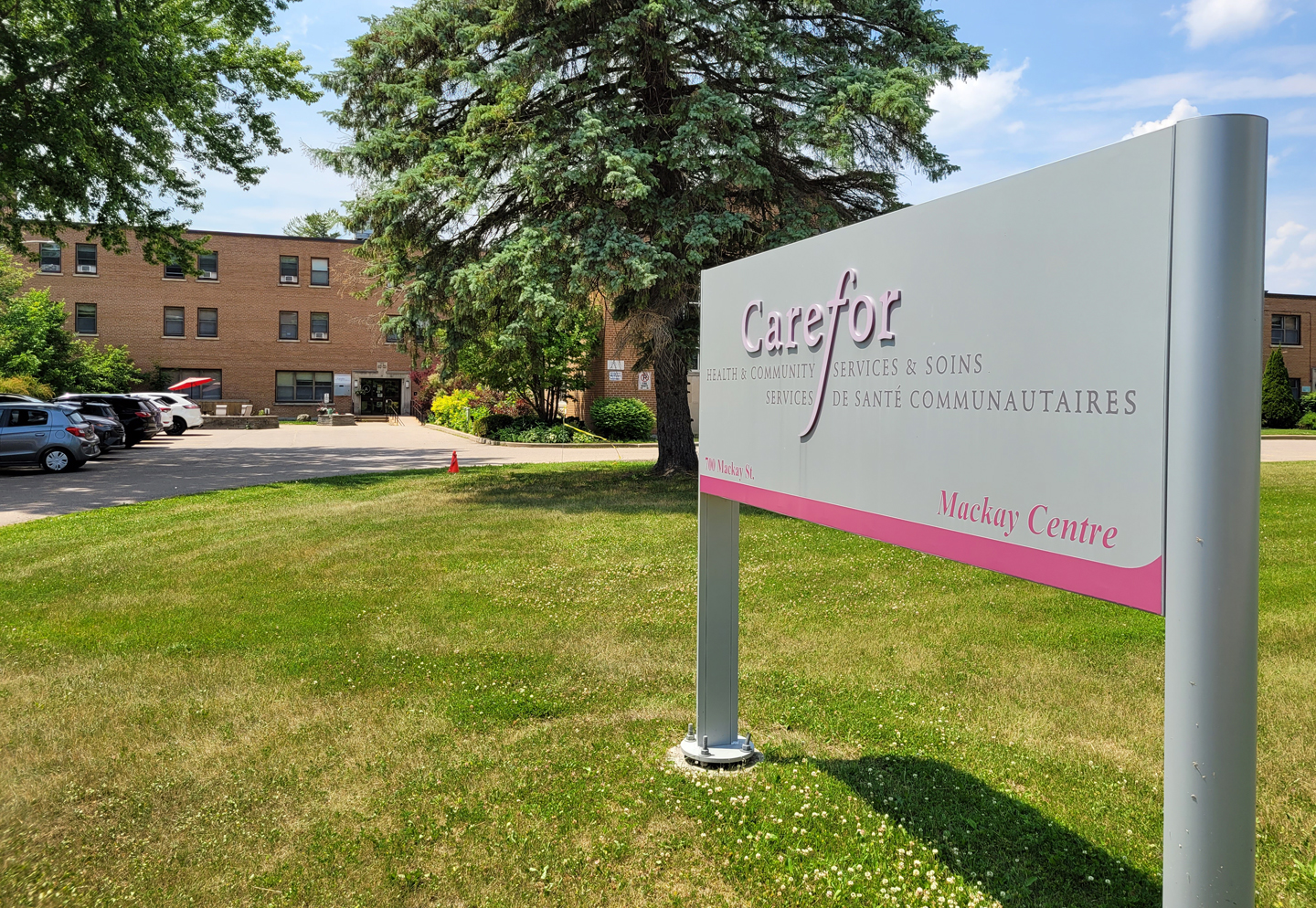
(County of Renfrew photo)
Ontario’s population is aging at a rapid rate, leaving retirement homes relying on funding to stay open and deliver care to keep up with demand on the healthcare system.
Carefor operates services to help seniors age in their homes, and according to director of communications, marketing and fundraising Trevor Eggleton they’re already seeing an increase in need, but a vast amount just can’t afford care.
“One third of the people who come to are from across the region and can’t afford the lowest cost of care,” he says.
Eggleton says support for facilities like Carefor is so important to help seniors age at home with the services they need.
“We believe in helping people age at home – which is where they want to be – and it’s the most affordable,” he says. “Having someone continue to age at home doesn’t cost the system generally as much as having someone spend three months at a hospital.”
Carefor already operates a vast number of programs to help seniors age at home such as transportation to medical appointments, and friendly visitors’ programs.
But Eggleton says while they have built excellent programs, Carefor still relies heavily on volunteers and funding to keep them viable through various campaigns.
“March with Melaine is a campaign that is doing is specific to our retirement homes and to help mitigate costs, so we don’t pass it on to our clients,” he says. “People can donate to our transportation program and others at Carefor.”
Carefor is a not-for-profit charity operating in the Ottawa Valley offering a wide array of services for seniors.
According to the Government of Ontario, the number of seniors – aged 65 and over – increased by 18.9 per cent last year (2025) and with a sharp rise to 22.7 per cent by 2051.
(Justin Baumgardner)
Carefor Health & Community Services has announced the retirement of President and CEO Steve Perry after 28 years with the organization, including nearly a decade as chief executive, while naming Emma Tibbo as Acting CEO during the search for a permanent successor.
Perry has accepted the role of Executive Director of the Petawawa Centennial Family Health Centre. “Steve’s impact on Carefor and the broader health and community care sector has been extraordinary,” said Board Chair John MacKenzie. “His leadership, vision and unwavering commitment have helped position Carefor as one of Ontario’s most respected healthcare organizations.”
During Perry’s tenure, Carefor navigated the COVID-19 pandemic, workforce shortages and major changes across the healthcare sector while achieving “Exemplary Standing” with Accreditation Canada and modernizing its operations. Under his leadership, the organization also grew by 50 per cent over the past nine years. That growth included expanded services at Carefor Hospice Cornwall, where community programs have more than doubled the number of palliative clients supported annually. Perry also oversaw the alignment of Carefor’s programs across Eastern Ontario, including the standardization of care practices at the Cornwall hospice, retirement homes in Ottawa and Pembroke, home care services and community support programs. The Board has appointed Tibbo to lead the organization on an interim basis while a formal recruitment process is underway. “Emma’s proven leadership, healthcare expertise and knowledge of Carefor make her exceptionally well-positioned to guide the organization during this transition,” MacKenzie said. “The Board is confident in her ability to provide stability, advance key priorities and support Carefor’s long-term success.”
Tibbo had recently joined Carefor as Vice-President, People, Strategy & Growth after serving as CEO of The Glebe Centre and Abbotsford House in Ottawa.
PETAWAWA — After nearly three decades with Carefor Health and Community Services, including almost 10 years as president and chief executive officer, Steve Perry is stepping into a new leadership role with the Petawawa Centennial Family Health Centre.
The Petawawa Centennial Family Health Centre (PCFHC) has appointed Perry as its new executive director, while Carefor announced Friday that he is retiring as president and CEO after 28 years with the organization. Perry will remain with Carefor until August to help ensure a smooth leadership transition before taking over at the Petawawa health centre.
The move keeps one of the region’s longest-serving healthcare leaders in Renfrew County.
Perry succeeds longtime PCFHC executive director Judy Hill, who is being recognized by the board for her years of service leading the organization.
“The board is extremely pleased to welcome Steve as our new executive director,” said Paul Moreau, chairman of the Petawawa Centennial Family Health Centre board of directors. “We are very fortunate to have found someone from our local area with such extensive health care experience. Steve’s leadership will play a key role in guiding the health team and ensuring the continued growth and long-term success of the Petawawa Centennial Family Health Centre.”
According to the health centre, Perry brings 28 years of experience in community health care, system leadership and collaborative practice, along with extensive knowledge of the regional healthcare system.
As executive director, Perry will oversee the overall leadership and operations of the not-for-profit primary care organization, working with a multidisciplinary team that includes physicians, nurse practitioners, registered practical nurses and allied health professionals, while also strengthening partnerships with community organizations.
Established in 2005, the Petawawa Centennial Family Health Centre now serves more than 9,000 active patients and is home to more than 17 physicians, five nurse practitioners and a range of allied health professionals. The centre also provides space for several community-based healthcare services, including the Diabetes Education Outreach Team from Pembroke Regional Hospital, Virtual Triage and Assessment Centre (VTAC) Community Assessment Centre, among others.
The board also thanked outgoing executive director Judy Hill for her leadership, noting she helped develop innovative programs, including the Integrated Virtual Care Program, while advocating for improved access to healthcare throughout Petawawa and Renfrew County.
At Carefor, Perry’s departure marks the end of a tenure that saw the organization expand and strengthen home and community care services across Eastern Ontario, including Pembroke and Renfrew County.
“Steve’s impact on Carefor and the broader health and community care sector has been extraordinary,” said John MacKenzie, chairman of Carefor’s board of directors. “His leadership, vision and unwavering commitment have helped position Carefor as one of Ontario’s most respected healthcare organizations.”
During Perry’s time as CEO, Carefor navigated the COVID-19 pandemic, workforce shortages and major changes in the healthcare sector while modernizing operations and earning Exemplary Standing with Accreditation Canada.
He also oversaw the alignment of Carefor’s programs and services across Eastern Ontario, including the standardization of care practices at the organization’s retirement home in Pembroke and community support services throughout Pembroke-Renfrew County.
“On behalf of the board and the entire Carefor team, we thank Steve for his decades of service and wish him every success in this next chapter,” added MacKenzie.
Carefor has appointed Emma Tibbo as acting chief executive officer while the board conducts a formal search for Perry’s permanent successor.
Tibbo recently joined Carefor as vice-president of people, strategy and growth after serving as chief executive officer of The Glebe Centre and Abbotsford House. Her previous leadership experience includes senior positions with The Ottawa Hospital, Queensway Carleton Hospital, BDO Canada and ParaMed Home Healthcare. She also previously served on Carefor’s board of directors.
“Emma’s proven leadership, healthcare expertise and knowledge of Carefor make her exceptionally well-positioned to guide the organization during this transition,” said MacKenzie. “The board is confident in her ability to provide stability, advance key priorities and support Carefor’s long-term success.”
Two student-led initiatives are being organized at École secondaire catholique La Citadelle.
Matchs de l’espoir
May 14, from 5 to 8 p.m., the senior soccer teams from l’école secondaire catholique La Citadelle and l’école secondaire catholique Le Relais will participate in the “Matchs de l’espoir” at Optimist Park in Cornwall. The event aims to raise funds for the Canadian Cancer Society. The students are playing for a cause that has touched many families in our community.
Fear Factor
Throughout the month of May, La Citadelle’s Spirit Club is organizing a Fear Factor fundraiser in support of the Carefor Cornwall Hospice. Students are collecting donations to reach fundraising milestones that will unlock different challenges completed by staff members during a final event May 29, in front of the school.
This year, donations are being made online directly through the Carefor platform. Here is the link to the fundraiser: https://carefor.ca/event/levee-de-fonds-fear-factor/Share this article
A celebration of life held at Rurban Brewing has raised $1,000 for Carefor Hospice Cornwall in memory of Kerri Bergeron, a devoted educator who passed away April 7 at the age of 50.
Friends and family gathered at one of Bergeron’s favourite places alongside her husband, Leigh, and daughter, Kali, to honour her life while supporting the hospice that cared for her in her final days.
“On April 7th, I had to say goodbye to Kerri. She was my world for 30 years,” said Leigh Bergeron. “Hospice was truly amazing in every way possible. Their care and support are unmatched! It is our great honour to do what we can to help support their efforts to help others experiencing the same loss we have.”
Bergeron was widely known as an inspiring educator who built a successful high school hairdressing program, mentoring students and helping them pursue careers in the skilled trades. Her classroom was recognized as a welcoming space where students felt supported and encouraged to succeed.
In keeping with her generous spirit, Bergeron also chose to donate her body to science, ensuring her commitment to education and learning would continue beyond her lifetime.
Hospice officials said the donation will directly support compassionate end-of-life care in the community.
“We are incredibly grateful to Rurban Brewing, Leigh, and Kali for hosting such a beautiful celebration of life in Kerri’s memory,” said Rhonda Simpson, Fundraising Manager at Hospice Cornwall. “This generous donation means so much to Hospice, as it helps us continue providing compassionate end-of-life care to members of our community.”
Simpson added that Bergeron’s passing is also a personal loss, having met her through figure skating. “Kerri will be deeply missed.”
The family has encouraged further donations to hospice care or breast cancer research in Bergeron’s memory.
Annual fundraiser for hospice supports operations and provides the opportunity for families to reunite to remember loved ones.
The Hike for Hospice fundraiser helps to ease the pain of passing but is increasingly becoming a time and place for reunion.
“The run is more than just fundraising; it’s also a day to commemorate and remember loved ones, and to visit as a family,” Carefor Hospice Cornwall fundraising manager Rhonda Simpson said on Sunday.
The Hike for Hospice attracted about 80 participants, including Connie McGillis, who was happy to socialize afterwards with former clients, staff members, and volunteers.
McGillis, like many of the participants, wore a personalized shirt that bore the name of a hospice patient — in her case, Della Lauber.
“She was my best friend and second mother,” McGillis said.
This year’s event also marked the first time organizers set up a table for participants to personalize small rocks with the names of hospice patients. They were placed within the hospice’s new memorial garden that was donated by Habitat for Humanity Cornwall and the Counties.
Fundraisers collected an estimated $30,000 for hospice, although the final figure is still to be determined.
Simpson said she expected registration would continue to rebound after the hike was discontinued during the COVID-19 pandemic.
Carefor PR/fundraising manager Trevor Eggleton said there is a possibility of further growth as Carefor considers the idea of moving the hike into a more public venue, away from the hospice property, which is near the far end of Cornwall’s Second Street West.
Simpson said she was just as grateful for the corporate support, citing title sponsors: Dignity Memorial — Lahaie and Sullivan Cornwall Funeral Homes, and M. John Sullivan.
Cornwall Kinsmen Club members once again served up a barbecue and treats for participants and volunteers.
Dignitaries supported the hike, including Cornwall Mayor Justin Towndale, Stormont—Dundas—Glengarry MP Eric Duncan, Stormont— Dundas—South Glengarry MPP Nolan Quinn, hospice physician Dr. Raji Menon, and Carefor director of community and hospice Jason Samson.
“It’s great to see the growth of this event for hospice; we’re very fortunate to have this facility in our community,” said Towndale, after completing his hike.
The mayor said hospice’s community support has been so consistent, it is one of the few charitable organizations which do not request direct financial assistance from the municipality.
Fundraising also support hospice’s other services, including bereavement support.
For more information on Carefor Hospice Cornwall, visit carefor.ca/services/palliative-care.
Hike for Hospice, an annual event held in support of compassionate end-of-life care at Carefor Hospice Cornwall, will be held May 3 from 1 p.m. to 3 p.m. at 1507 Second St. West.
For more information, visit carefor.ca/event/hike-for-hospice.
This meaningful community event brings together families, friends, and supporters to honour loved ones while raising essential funds to support hospice care in our region.
The Hike for Hospice is not only a fundraiser, but a powerful opportunity to highlight personal stories of remembrance, community connection, and the importance of accessible palliative care.
Carefor Hospice Cornwall opened its doors to local palliative care patients in the fall of 2009.
Since that date, it has provided end of life care to more than 1,200 residents and their families.
All services are free of charge to the patient. Hike for Hospice helps to raise much-needed funds to assist in the continued operation of the hospice.
The second annual Valentine’s Day Gala for Carefor Hospice Cornwall at the Agora Catholic Centre, raised $9,000 to support end-of-life care across Cornwall and SDG.
Guests enjoyed a champagne reception, formal dinner, live and silent auctions, and a Heads and Tails game. Tickets were $150, with tables of ten available for $1,500. Ghislain Mayer of Country Catering said, “We chose to run a fundraiser for hospice because it’s one of those organizations that quietly support families during the most difficult moments of their lives.” Jackie Lafave of Seaway Valley Entertainment added, “We felt it was important to give back and help ensure Hospice services remain available to other families.”
Rhonda Simpson of Carefor noted that with 40 per cent of operating costs funded by the community and 205 admissions in 2025, “events like this are vital” to sustaining hospice programs. “Every dollar raised stays right here in our community,” Simpson added. “It helps ensure that patients and their families receive compassionate, dignified care when they need it most, without having to leave Cornwall for support.”
A new hub for mental health, addictions and housing support services has opened in Pembroke.
A grand opening ceremony for the Renfrew County Mesa HART Hub was held on Thursday, February 5th.
The facility, located at the Carefor Mackay Centre in Pembroke, will provide services to people struggling with homelessness, mental health issues and substance abuse.
Renfrew County’s Chief Administrative Officer, Craig Kelley, spoke at the event saying it was something people within the county and other levels of government have been working towards for a long time.
Many figures involved at various stages in the process of opening the facility were in attendance.
Renfrew-Nipissing-Pembroke MPP Billy Denault spoke about the provincial government’s investments in expanding housing, mental health and addictions services.
Lanark-Frontenac-Kingston MPP John Jordan was also in attendance on behalf of Associate Minister of Health and Addictions Vijay Thanigasalam, who Jordan works as a parliamentary assistant to.
Jordan spoke about the government’s work to expand healthcare access provincially.
Renfrew County Warden Jennifer Murphy said the opening of the hub is an important milestone, because the work it represents reflects the needs of people in the community.
Pembroke Mayor Ron Gervais said he believes the city and the surrounding area needs more serivces like this, and that he was proud to be in attendance.
Pembroke Regional Hospital CEO and President Sabine Mersmann said that collaboration has always been one of her team’s top priorities, and she’s pleased to see so many different groups join forces to open the Mesa HART Hub.
Representatives from Carefor were also in attendance.
The hub is built on the “Mesa” model, described as a “collaborative, multi-sector approach” to providing care for people in need of its services.
(Written by Steve Berard)
"*" indicates required fields