
Death is one of the few experiences every human being shares, yet it remains one of life’s greatest mysteries. For many people, fear of death comes not from death itself, but from not understanding what happens as life draws to a close.
Dr. Diane Poilly, resident physician at Carefor Hospice Cornwall explains what happens during this process. Through her work caring for people at the end of life, Dr. Poilly has witnessed hundreds of deaths and helped countless families navigate their final days together.
Her message is reassuring: dying is often much less frightening than people imagine.
Death Is a Process, Not a Moment
Many people think of death as a single event, the moment a heart stops beating or the brain ceases to function. Medically, those things are true, but Dr. Poilly explains that death is usually a gradual process rather than a single instant.
Whether someone is living with cancer, heart disease, kidney failure, or another serious illness, there are common patterns that emerge as the body begins to shut down.
“The process is generally the same,” she says. “The body gradually has less energy, sleeps more, and becomes less interested in food and drink.”
While every person’s journey is unique, the body often follows a predictable path as it prepares for death.
The Body Begins to Slow Down
One of the first changes families often notice is a decline in energy.
Dr. Poilly tells patients that over time, their bed becomes increasingly comfortable. Activities that once seemed important lose their appeal, and people naturally spend more time resting.
“They’re not forcing themselves to stay in bed,” she explains. “It’s simply where they feel most comfortable.”
As energy declines, appetite also decreases. This can be one of the most difficult changes for families to witness.
Eating is such a fundamental part of caring for someone that when a loved one stops eating, families often worry they are starving.
But dying people usually do not feel hungry.
“The digestive system is slowing down,” says Dr. Poilly. “They don’t want large meals, and that’s okay.”
Perhaps even more difficult for families is the loss of thirst. While many people can understand not wanting to eat when they’re sick, they struggle to understand how someone could no longer want to drink.
Yet Dr. Poilly says this is a normal part of the dying process.
“They may have a dry mouth, but they don’t feel thirst the way healthy people do.”
A Shrinking Circle
As death approaches, another change occurs that is less physical and more emotional.
Dr. Poilly describes it as a person’s world gradually becoming smaller.
Earlier in life, we juggle many responsibilities, relationships, and commitments. But as someone nears death, those outer circles begin to fall away.
The bank manager. The neighbour. The old friend from decades ago. Those relationships become less important.
Instead, people focus on a small inner circle of those they love most: spouses, children, siblings, and close friends.
Conversations become more difficult and often less necessary.
“They still enjoy the presence of loved ones,” says Dr. Poilly. “They don’t need to be entertained. They don’t always need to talk.”
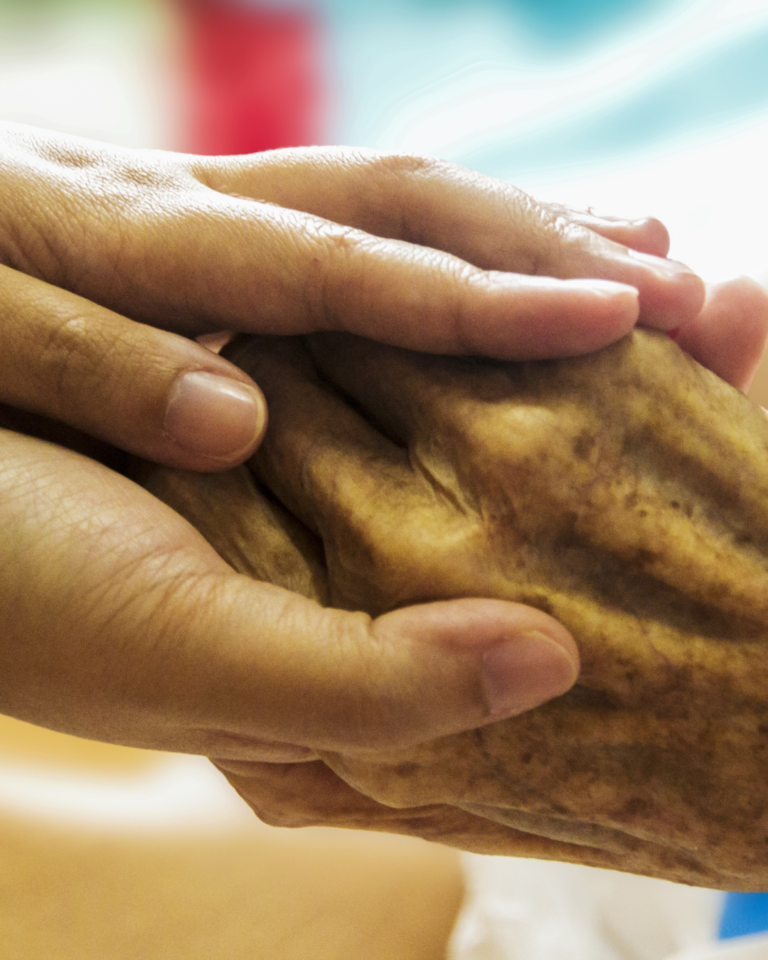
Often, simply sitting quietly together, listening to music, holding a hand, or sharing a peaceful moment becomes enough.
The Final Days and Hours
As organs begin to fail, the body enters its final stage.
Eventually, swallowing becomes difficult. People spend most of their time sleeping and may drift in and out of consciousness.
Dr. Poilly describes this period as an intermittent coma. Someone may appear deeply asleep, briefly open their eyes or respond, and then drift back into unconsciousness.
Breathing patterns also begin to change.
Instead of the steady breathing we experience every day, breathing may become shallow, rapid, or irregular. There may be pauses that seem alarming to family members, followed by a few breaths before another pause.
These changes often signal that death is approaching.
Colour changes may develop in the hands, feet, or legs as circulation slows. The skin can appear grey or mottled. The pulse becomes weak, and the heart works harder to push blood to the body’s vital organs.
At this stage, death may be hours or even minutes away.
What Is Happening Inside?
For illnesses such as advanced cancer, the disease gradually overwhelms the body’s ability to function.
Tumours consume significant amounts of energy and can interfere with the normal operation of organs. Cancer that has spread to the liver, lungs, bones, or other parts of the body can prevent those organs from doing their jobs.
As multiple organs begin to fail, the heart becomes less efficient. Less oxygen reaches tissues and cells. The body slowly loses its ability to sustain itself.
Eventually, blood flow decreases to the point where vital organs can no longer function.
“The common pathway is organ failure,” Dr. Poilly explains.
What Does the Person Experience?
One of the greatest questions families have is whether their loved one is aware of what is happening.
According to Dr. Poilly, many people remain aware of the presence of loved ones even when they can no longer communicate.
She compares the experience to that of a newborn child.
A baby cannot hold a conversation, but they can still feel comfort, recognize voices, and sense the atmosphere around them.
Similarly, people nearing death often seem to recognize familiar voices and loving presence even when they cannot respond.
The brain itself becomes increasingly affected as other organs decline. The liver, kidneys, heart, and lungs all play important roles in maintaining the environment the brain needs to function properly.
As those systems weaken, thinking becomes slower and less clear.
People may speak about events from long ago, revisit childhood memories, or say things that seem confusing to those around them.
Visions, Memories, and Peace
One phenomenon Dr. Poilly has witnessed many times is what families sometimes call “end-of-life visions.”
Patients occasionally report seeing deceased parents, spouses, siblings, or friends.
“They’re not afraid,” she says. “They’re often excited or comforted by it.”
While medicine cannot fully explain these experiences, Dr. Poilly observes that they are generally peaceful rather than frightening.
She believes many people naturally turn inward during this time, reflecting on childhood, family, and the people who shaped their lives.
Whatever the explanation, families are often reassured to learn that these encounters rarely appear distressing.
Does the Fear Go Away?
Perhaps the most surprising insight from Dr. Poilly’s years in hospice care is that many people become less fearful of death as it approaches.
“I’ve seen people change,” she says. “It is not as scary as I thought it would be.”
While some individuals struggle with fear right until the end, many eventually reach a place of acceptance. They become tired of being sick and recognize that their bodies are no longer able to recover.
For these individuals, the focus shifts from fighting death to finding comfort, connection, and peace.
Death remains one of life’s deepest mysteries. Yet for those who witness it closely, there is often a sense that dying is not a sudden battle but a gradual transition. The body slows down, the world grows quieter, loved ones draw closer, and, for many, fear gives way to acceptance.
Understanding this process does not remove the sadness of losing someone we love. But it can replace some of the uncertainty with knowledge, compassion, and perhaps a little less fear.