
Carefor’s newly appointed Personal Support Worker Team Leaders are taking on a significant role at many of the 34 retirement homes Carefor provides service to in Ottawa and Eastern Counties. With a reduction in the number of people flowing in and out these homes, there has been an ongoing need for more leadership support.
Director of PSS Robin Meyers, IPAC Manager Diane Roscoe, and PSS Manager Jennifer Faucher collaborated with a team of nursing students in consultation with PSWs to bring this new role to life. PSW Team Leaders will complete a 6-hour online mentorship and leadership courses at Western University and 10-hour palliative care online training.
With the ongoing shortage of PSWs in Ontario, opportunities in career advancement are top of mind. For many PSWs at Carefor, our organization marks the beginning of their career path. Robin says this new role is an example of how Personal Support Workers can continue to grow and advance their career at Carefor. “It’s also an opportunity to recognize the contributions of Carefor PSWs,” she adds.
PSW Team Leaders are on-site support for their colleagues, providing training and maintaining a positive work culture, which values the retention of our staff. While this role is new, these role models have been informally supporting their respective teams for years now.
Earlier this month, Awa Lamiraux was of the first few long-time PSWs to be launched into this role. Over a decade ago, Awa joined Carefor and now, she can’t imagine doing anything else: “I’ve been to every corner of Ottawa and have taken care of some high-profile individuals to people living with little means,” she says. “The work we do every day is very important. We bring care to all who need it in the community.”
Awa can’t stress enough the importance of this formalized position to support staff: “We’re seeing lots of new faces at Carefor who need more support in their new role. My role is to continue supporting them the best I can and make sure they feel comfortable.”
The PSS Team is confident the new formalized training will go a long way in recognizing and retaining staff. “PSWs are the unsung heroes of the health care system despite playing a vital role in people’s health and wellbeing,” Robin says.
In the last year, Carefor Personal Support Workers (PSWs) have made more than 700,000 home visits, and for good reason. They help people who need assistance due to illness, aging or increasing dependencies.
Their services include bathing assistance, exercise, companionship, feeding assistance, grooming, light housekeeping, and more. This level of personal care helps to reduce caregiver burnout and keep clients safe and healthy in their homes.
Longtime Carefor PSW Heather Munn says home care PSWs are a lifeline for not only clients, but also their families who need that helping hand: “PSWs take some of the load off from family members who have a lot on their plate.”
However, during these uncertain times, their role has become more important than ever to keep people out of hospital and stay socially connected. They have become a calming presence, and for some, one of the few faces they will see during a time of social isolation.
While clients aren’t able to see the warm smiles behind their masks, they are still receiving compassionate care during a great time of need.
“Continuing to see our clients helps to keep a sense of regularity during this challenging time,” Heather explains. “Despite everything that has changed, they can rest assured that they are still getting their showers, being fed, changing their clothes, and maintaining some kind of social interaction.”
Heather says being able to have genuine conversations with her clients when some of them don’t have many opportunities to connect with the outside world has improved their mental health: “We’re all running out of TV shows to watch. I come in as a different face, we can have a conversations and they can ask me questions that concern them … They aren’t seeing their family or friends, but at least they see me, and that keeps them calm.”
While this is an undeniably difficult time for our clients, it is equally as challenging for some of our staff.
Heather lives with her family, and her mother and grandfather are at high risk for severe illness from COVID-19. This constant worry is not easy, but she is committed to serving her clients when they need it the most.
“Some clients are so kind that they’re offering lodging for me because they’ve heard on the news that some health care professionals are looking for a place to live during these uncertain times.”
Support during this COVID-19 pandemic will help protect our Carefor Heroes, their clients, and their own family. Give to our local frontline workers at carefor.ca/donate.
When you visit our 16-bed home designed for women living with dementia in Richmond Village, located just 20 minutes outside of Ottawa, take a close look at the apple tree. You’ll notice something different – underneath the beautiful large crown of the tree, grows another variety of apple.
“It’s quite metaphorical,” Richmond Care Home (RCH) Supervisor Amy England shares, noting that the tree was planted in memory of John and Lilian Bosco’s parents, who were instrumental in getting Richmond Care Home off the ground 20 years ago.
Carefor took over Richmond Care Home, with the couple’s blessing, just a few years after the home became operational. It was over these years that two types of apples began to form on the tree. “This home has really evolved over the years. Much like the big tree, Carefor represents the larger organization that protects and maintains the integrity of the smaller, more intimate care setting.”
Amy has been working at the home since its humble beginnings. In honour of its 20th anniversary, she proudly looks back on how much of an impact this home has had on hundreds of families.
“The most important thing to me is for us to maintain the home’s foundational philosophy of care. We are proud to share that Carefor has done this quite well. We’ve made it a priority to maintain the integrity and intimacy of being a small welcoming home for women living with early or moderate stages of dementia.”
Carefor is also proud to be providing such high-quality care and support during these challenging times. Although the COVID-19 pandemic has taken an emotional toll on loved ones, families are grateful to know their mothers continue to be in a safe and loving environment.
“I’d give Richmond Care Home five stars. They do everything they possibly can for their residents,” says Ken Black, whose mother Elsie has been a resident at the Home for over a year.
While the pandemic has impacted the way we operate our services, these types of smaller care settings are more vital to our community now, than ever before. We must continue to invest in these smaller types of care settings to meet the growing demand. Amy hopes to see this home continue to grow to serve even more families that are seeking a comfortable and safe haven for their moms: “An addition would be great.”
Team Carefor looks forward to supporting this next stage of growth in Richmond, much like the yearly growth of this unique apple tree.
Special thank you to all the staff at Richmond Care Home for keeping a smile on everyone’s face during this unprecedented time.
Transporting our clients to and from their medical appointments is a key community support service, but it has never been as important as it is now in the shadow of COVID-19.
Carefor’s non-urgent transportation program offers flexible and affordable transportation to help individuals unable to access other means of transportation to local and out of town medical appointments. In 2018-2019 alone, the program gave more than 57,000 rides to nearly 4,000 people.
When driver Bob Derro, locally known as radio DJ Brother Bob, was asked if he was comfortable to continue providing transportation services during this difficult time, he agreed without hesitation.
“There’s got to be people who step up,” he says.
Providing this service isn’t only a job for Bob, it’s a time to be there for someone during their greatest time of need. “You have to be a comforting spirit in troubled times, and that’s our job here at Carefor,” he says, touching on the importance of lending an ear and spreading positivity.
For seniors like Betty, finding transportation can be one of the hardest parts of getting care. Often, seniors do not have access to standard vehicles or to accessible vehicles for those with disabilities.
“Without them, I wouldn’t be anywhere,” she says. “You’re not just their job, you’re their friend.”
Betty isn’t the only passenger with that sentiment, Bob says everyone he has driven has expressed a tremendous amount of gratitude for the care they’ve received amid the coronavirus pandemic: “It makes it all worthwhile.”
For many of our passengers, this service is a matter of life or death: “People still need their life-saving treatments, such as dialysis and chemotherapy.”
He adds: “It’s an honour to be serving out here on the front lines.”
To learn more about Transportation services, click here or email us at info@carefor.ca. Support our Carefor Heroes by giving at carefor.ca/donate.
Nowadays, it’s hard to escape any news about COVID-19. It’s taken over nearly every aspect of our lives, and for those who are lucky, we spend a small portion of our day thinking about it.
For some of our Carefor clients, especially those who are immunocompromised, COVID-19 is a constant threat. That said, they still require continuous care during this outbreak, and that’s where Carefor nurses come into play.
Community health nurses play a pivotal role in keeping the most vulnerable population during this COVID-19 pandemic healthy and connected.
Our nurses, like Natalie Gauvin, work diligently to meet community demands while finding ways to decrease the risk of virus transmission.
“Our patients are used to not leaving home much, that’s why we come to them,” Natalie explains, stressing that providing care during times of isolation is important now more than ever.
For example, one of the palliative patients she attends to has advanced Chronic Obstructive Pulmonary Disease, which requires the patient to be on home oxygen.
The client’s health care support team must work strategically to ensure the health and safety of the client in their home.
“She had been getting a visit from a physician and nurses for her medication, but now nurses prepare pre-loaded syringes for medication to self-inject. The visiting nurse contacts the physician to give an update … One less visiting person means less risk of transmission. The nurse is key to holding it together. And without a visiting healthcare professional, the patient would likely have to go to the hospital.”
While reducing the risk of transmission is key, keeping the patient connected to the outside world is as significant.
“In many cases our nurses’ caring approach is the only real contact many have with the outside world … during a time of fear and isolation,” Nursing Manager Sean Sudbrink says.
In 2019-2020 alone, Carefor’s community nurses in Ottawa made more than 100,000 visits. Thank you to our community health professionals for meeting needs during a time of crisis.
To learn more about in-home nursing services, click here or email us at info@carefor.ca. Support our Carefor Heroes by giving at carefor.ca/donate.
Healthcare delivery should never take place in isolation. It’s a system that works together around the client’s needs.
Often when people think of healthcare delivery they think of it taking place in the community, but at home is one of the best and safest places it can happen. And even in one’s home it requires an integrated approach. Registered dietitians like Sylvie Jacques are part of this approach.
Amid the COVID-19 pandemic, Sylvie has spent a lot of time virtually demystifying, educating, and reducing fear surrounding food safety.
“As front-line workers, it’s our role to manage symptoms and ensure people are safe as possible,” she says. “We personalize the reality of the situation to our clients and their loved ones.”
However, it’s not only about simply doing your job, it’s going that extra mile at a time of great need for many clients.
For Azeem Shakoor, words can’t describe the immense help Sylvie has had on his life these past few months. When Mr. Shakoor required a specialized nutrition supplement, which was quite expensive and in short supply at the time, Sylvie persevered to meet the patient’s needs. In a short time, she was able to deliver an emergency supply of the supplement until he was able to apply for funding.
Mr. Shakoor said he was speechless by the surprise, bringing him to tears. “I couldn’t believe she was able to get access to the flavour and type of liquid diet that I can actually ingest … which helps me recover instead of making me feel sick, as I do with all the other ones.”
Mr. Shakoor isn’t the only client who has expressed a similar sentiment of gratitude. Sandra Szirtes says Sylvie’s knowledge and compassion has made a world of difference to her husband.
“She truly cares and thinks outside the box. She knows how to make a difference.”
As lockdown restrictions have eased in the province and more health care professionals are able to safely provide services in people’s homes, Sylvie continues to do what she does best. She also can’t stress enough the importance of home care, especially during this time.
“People don’t want to go to the hospital or long-term care homes; they choose to stay at home and they may need more than one professional to ensure they can do so,” she says. “We’re improving quality of life in a safe environment.”
In 2019-2020, Carefor’s Allied Health team, comprised of registered dietitians, occupational therapists, social workers, and physiotherapists made approximately 30,000 visits in Ottawa.
Support Carefor Heroes like Sylvie and the clients she cares for by donating at carefor.ca/donate.
Going to see the doctor for an annual check up is an important preventative measure for maintaining our health as we age.
However, getting to and from these appointments may seem like a luxury to some, as many seniors within Eastern Counties including Hawkesbury travel over an hour in each direction for essential medical care. Taxi fares from Hawkesbury to the Ottawa Hospital are well over $170 per direction, before adding in waiting time. If someone needs to make more than one trip per month for essential appointments, these costs add up making it near impossible to continue to receive essential care.
This past year, Carefor Eastern Counties has made over 25,900 drives to medical appointments, servicing over 1,600 people within our community. These medical appointments ranged from seeing a family doctor to receiving life-changing dialysis, cancer treatments, and more. Transportation fees has been made more affordable, charging $0.42-$0.47 per kilometer versus other for-profit services. However, in many cases these fees can still be taxing to passengers depending on their frequency of use.
Yves Deschamps is a Carefor Eastern Counties driver, providing essential transportation services to the Hawkesbury area. Over the past five years Yves has gotten to know many of the people who receive ongoing transportation services. “I enjoy what I do, and the people I can help. It’s a part of me.”
Yves has experienced first-hand some of the tough decisions his clients have had to make over the years, especially when they have had reoccurring medical appointments in Ottawa. “For someone travelling from Rockland to Ottawa, the fees usually around $30 per trip. However, if you start travelling from Hawkesbury, that fee jumps to over $80 per trip. If you need to go to the eye doctor three or four times a month because you have cataracts, you can’t afford it.”
Although the number of drives has dropped over the past couple months, family practitioners and non-emergent surgeries are being rebooked. Many seniors are still feeling the financial ripple effect of the pandemic and are more likely facing financial hardships for the foreseeable future.
Greg Stevenson, the Supervisor of Transportation Services for Carefor shared his perspective. “The unique aspect we have in Eastern Counties is people in the rural cities and towns going into Ottawa. However, for those living in Ottawa there’s public transit, there’s taxis – it’s a much shorter range of distance from the client’s home to their doctor or to the hospital, where as in Eastern Counties it’s much greater.”
Greg and his team try to make essential transportation as accessible as possible. “A driver could conceivably be waiting for several hours and the time is not being charged to the client. There is no wait time charge. It’s strictly a kilometer charge.”
“It’s the tip of the iceberg of the actual cost of what the client is really paying.”, Greg shared. Carefor Transportation Services relies on funding from the Ministry of Health and donations to offset the cost of payroll, vehicle maintenance, fuel, and more to continue to provide this essential service to the community.
Carefor Eastern Counties relies on community support so drivers like Yves can continue to provide much-needed transportation to clients at an affordable rate. Help us offer your community affordable transportation by donating today.
As we continue forward with social distancing to prevent the spread of the Coronavirus, isolation has become a new reality. Although some are able to be home with their loved ones, many do not have this comfort and are feeling more alone than ever.
Carefor Hospice Cornwall, known for its positive atmosphere and friendly staff, is feeling similar pressures with visitation restrictions, as well as protocol changes impacting both staff and patients.
Nurse, Maureen Froats has been working at the Cornwall Hospice for five years now, offering care to patients transitioning through their final stage of life. “Bedside nursing is very hands on, and we have a good team here. Everyone has an important role to play” Throughout her five years she has experienced many facets of patient care, however nothing compares to the COVID-19 pandemic.
“The masks, the gloves, the gowns… they take away from the personal touch, but it’s what we have to do considering the circumstances.” Although the Hospice team still does everything possible to comfort and provide a high level of care to patients, the team has encountered some hurdles. “We’ve now realized some patients are struggling to understand us when we’re talking to them because they subconsciously rely on lip reading in conversations and cannot do so with a mask on.” Other simple yet comforting points of contact like giving a patient a hug has been stopped for the time being. “It’s a lot of talking, consoling, and listening.”
At this time, Hospice has limited visitors to one per patient. “Before, we used to have families in here day and night to stay with their loved one. They could rely on one-another and take shifts.” Prior to COVID-19, families would support one-another in common areas such as the servery. “Families traditionally would meet in the kitchen just like at home. They would get to chat with each other and be a support for one another over tears, laughter and war stories.” Now, visitors are limited to the patient’s room.
Until the day the visitor restrictions are lifted, the Hospice team will continue to move forward and provide compassionate end of life care to patients. “We will get over this. Try not to get discouraged and if you do, only do it for a couple minutes and then chin up and carry on.”
Help support the team at Hospice by donating today.
With news of the homeless population increasing in Ottawa amid COVID-19, Carefor staff at Ottawa Inner City Health are working diligently to uphold the health and safety of people living with mental health or addiction.
For ten years, this health care partnership between the City of Ottawa and other stakeholders has been providing maintenance and health care services to the homeless population.
Colleen Jones has been a Client Care Worker from the beginning of its creation. She works at the Oaks, which houses the Managed Alcohol Program. She admits working hasn’t been easy amid the pandemic, but being in the front lines and helping her clients is more important now than ever.
“Our clients are as vulnerable as they can be and we have to do everything in our power by means of constant hygiene and education to keep them safe,” she says. “Many of them have lived through so much already and survived, so they think that COVID-19 is just another flu that they would survive, but chances are they wouldn’t.”
Before the lockdown, The Oaks relied heavily on volunteers for completing many tasks like cooking, cleaning, and laundry, but now all the responsibility lies on staff.
“We’re serving more than 50 clients and our work is doubled. Our clients see when we take our masks off our eyes are red from exhaustion. It’s nice to see some of them stepping up to the plate and working like some of our staff.”
Despite these challenges, staff are finding ways to brighten up the mood by playing music and telling jokes while respecting physical distancing. The pandemic has changed the way we communicate with others, but the sense of community remains the same.
“We’ve known some of these clients for a decade or more, they are our extended family and we are theirs.”
For that reason, protecting both clients and staff is crucial, because as Inner City Supervisor Kevin Nyembo says, without this service, his vulnerable clients would have nowhere to go: “Inner City is an essential service in the community – our clients are as vulnerable as they can be,” he stresses. “They tend to have challenging behaviours that people in other institutions, like hospitals, may have difficulty to handle. If we weren’t there, I don’t know where our clients would be.”
Learn more about the Managed Alcohol Program and Carefor’s partnership with Ottawa Inner City Health and Shepherds of Good Hope below.
Carefor: The Next Generation
At both Carefor Pembroke Mackay Residential Complex and Civic Residential Complex, residents admit that a heightened sense of social isolation these past few months has not been easy, but a few new friendly faces have made a world of difference.
For summer students like Hannah Rehel, a 19-year-old Carleton University student, and Bryan Fleury, a 16-year-old Jeanne –Lajoie high school student, working at Carefor meant positively impacting lives during a time of great need. 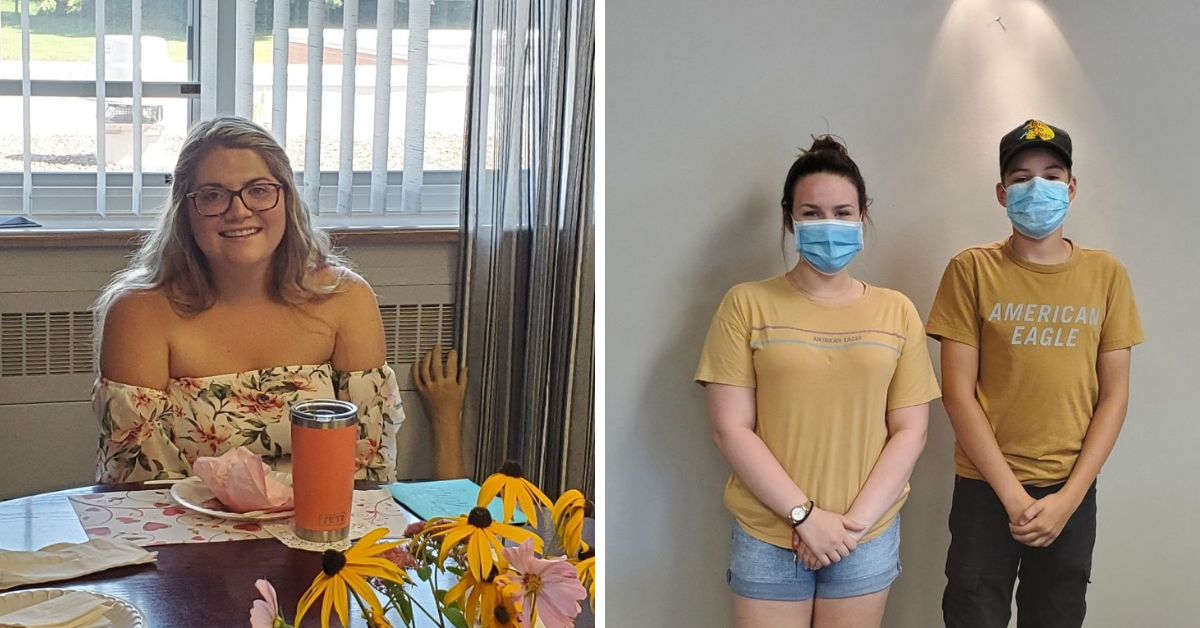
“Sitting at home during these challenging times was not an option for me,” Hannah said.
Some of our summer students were brought in from the Canada Summer Jobs Program, which helped staff with the assistance they needed to run day-to-day activities to ensure safety and engagement, during lockdown. Hanna spent her time helping with various tasks, from administration to recreation at the Civic Residential Complex.
For Hannah, working in a retirement residence affected her in ways she would have never imagined. “[It] warmed my heart,” she said. “Every morning I was greeted with big smiles and every activity I attended the residents accepted me with open arms. I came into their home and they treated me as if I was family.”
This experience opened her eyes to see the true value of her work, both at the residence and in the community: “I had many one-on-one visits with residents. These visits allowed me to be an ear for some when their families could not visit during these challenging times.”
“I loved it all. The atmosphere, the people, the activities, I felt very appreciated going to work so much that it didn’t feel like a job, it felt like a second home.” Hannah said.
After completing volunteer hours last year, Bryan returned to Mackay Residential Complex as a maintenance summer staff: “I knew right away this would be a great place to work.” For Bryan, parting from staff and residents wasn’t easy this year, which led him to apply for a casual position in the kitchen while he attends school.
Although our summer students are back in school, they have left knowing they created a special bond with residents while understanding the great importance and value of keeping our seniors safe and connected. Thank you to all our summer students for their bravery and compassion this year. They will be missed, but we can’t wait to welcome them back with open arms.
Home care and support services have been around for more than a century in Canada, but keeping people safe and healthy at home is more important now, than ever. As health care in Ontario is changing, Carefor is at the forefront of ensuring our clients’ needs are not only met now, but also in the future. Inspiring a new generation of health care workers means shaping a healthier and brighter future for our seniors.
"*" indicates required fields