
The radio crackles, sharp and urgent.
“Code Abby.”
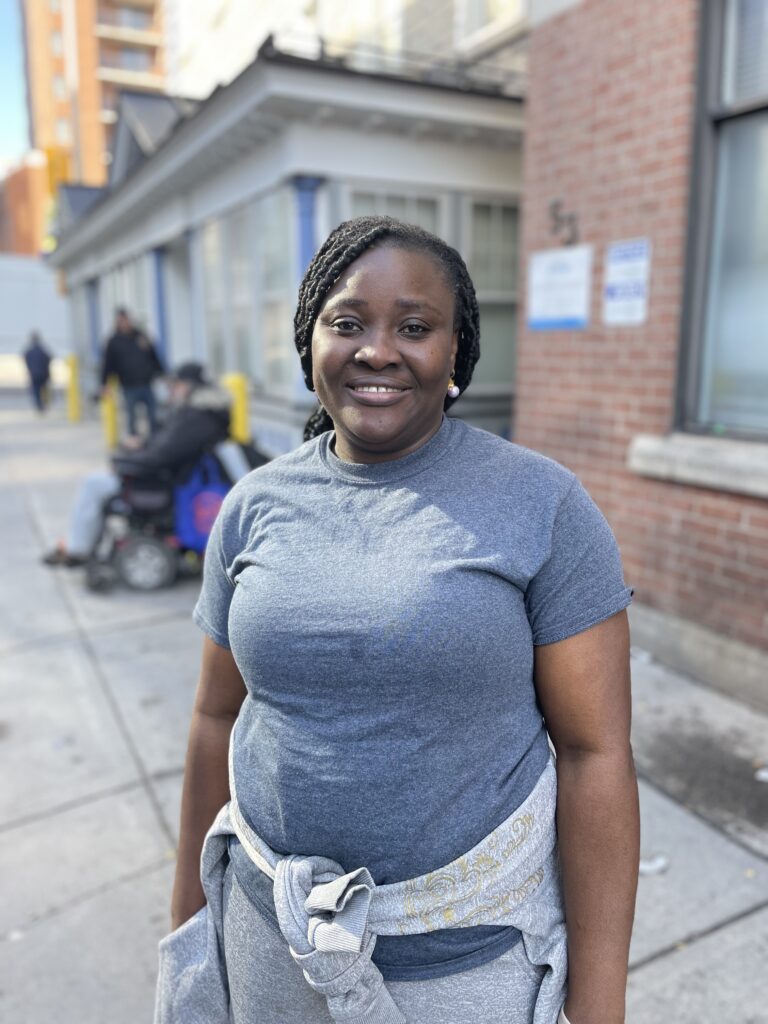
Oluwaseun is already moving before the message finishes. Around her, chairs scrape, footsteps pound, a practiced choreography snapping into place inside the TED Program at the Shepherds of Good Hope on King Edward Avenue. A Code Abby means one thing: someone isn’t breathing, or close to it, likely due to an overdose.
She grabs the bag, the one they always grab. Oxygen, naloxone, everything they might need. Beside her, nurses from Ottawa Inner City Health move just as quickly. There is no hesitation. There is no time for it.
They run.
The woman on the floor is blue.
That’s what Oluwaseun notices first, not her age, not her face, not the people shouting around them. Just the color. Blue hands. Blue lips. A body starved of oxygen.
“This is bad,” someone says.
Oluwaseun already knows.
They drop to their knees. The oxygen tank is there, the mask ready, but it’s too late for that. When someone is this far gone, oxygen alone won’t bring them back.
“Bag,” she says, and it’s already in her hands.
She starts pumping air into the woman’s lungs. One breath after another. Beside her, Nurse Bailey begins CPR, hard, rhythmic compressions that push life back toward a heart that has forgotten its job.
They call her name. Loud. Urgent. As if sound itself might pull her back.
“Come on. Come on.”
The room tightens around them, staff, clients, noise, but inside that circle there is only the woman, the count, the breath.
The paramedics arrive quickly. They take over with calm efficiency, voices steady where everything else feels sharp and fragile.
And just like that, the first fight of the shift is handed off.
Oluwaseun stands, her hands still remembering the rhythm. She hasn’t even fully caught her breath when another voice cuts through the air.
Another Code Abby.
They run again.
The second man is older. Sixties, maybe seventies. Thin. Still.
His eyes are open, but there is nothing behind them.
No pulse.
No movement.
For a moment, it feels different. He feels gone in a way the first woman didn’t, not hovering, not slipping, but already gone.
But there is no pause for that thought.
They start.
Someone has already given naloxone. Good. That buys time. Maybe.
“Start CPR.”
Oluwaseun drops beside him again, the now-familiar position. This time, she helps place the AED pads on his chest.
“Clear.”
A shock.
“Resume CPR.”
They rotate. Thirty compressions. Breaths. Switch. Again. Again. Again.
Time stretches.
Five minutes becomes ten. Ten becomes twenty.
Nobody does CPR for thirty minutes alone. It takes all of them, nurses, staff, even a Shepherd’s manager stepping in when arms give out. Hands replace hands. Breath replaces breath. No one stops.
“Keep going.”
Oluwaseun can feel the strain in her arms, the burn in her shoulders. She can hear the sounds no one wants to hear: the crack of ribs under pressure.
“Come on,” she whispers, not sure if she’s speaking to him or to the moment itself.
Thirty minutes.
By the time paramedics take over, bringing in a mechanical CPR device that pounds his chest with relentless precision, it feels like they have already given everything.
They step back.
And there’s a sudden calm following the chaos.
Later, they sit together.
After a Code Abby, there is always a pause, a chance to breathe, to speak, to say what needs saying.
“Are you okay?” someone asks.
Oluwaseun nods. “I’m fine.”
But the question lingers beneath the surface: Did he make it?
No one thinks so.
Thirty minutes is a long time.
She goes home with that weight. Carries it into the evening. Tells her son, quietly, that someone died.
Two days later, she walks back into work.
“They lived,” someone tells her.
“Who?”
“The man. He lived.”
For a second, she doesn’t understand.
Then it lands.
“He lived?”
The words come out half disbelief, half joy. Something lifts inside her, something she didn’t realize she was still holding.
He lived.
Both of them did.
And suddenly, the shift changes shape, not a day of loss, but a day where two lives were pulled back from the edge.
“It’s amazing,” she says later, searching for words and not quite finding them. “It’s like… God sent me to his side.”
But this is not unusual.
That’s the part most people don’t see.
Inside the partnership between Carefor, Shepherds of Good Hope, and Ottawa Inner City Health, this is what many days look like. Not always two in one shift, but often enough that no one is surprised by the call.
Oluwaseun has seen three or four Code Abbies in ninety minutes, once seven in a single shift.
Patterns emerge. A bad batch of drugs on the street. Paycheque time. A wave that rises and crashes through the community without warning.
“You don’t always know what’s out there,” Oluwaseun says. “But you see it in the pattern.”
This is the reality of addiction in the streets of Ottawa. It shifts, it evolves, it overwhelms. And the people caught in it, people without stable housing, without support, without safety, carry the consequences in their bodies.
But Oluwaseun is clear about something important.
Her job is not to solve that crisis. Her job is to stand in the middle of it, and choose people.
She sees them differently than most. Not as statistics. Not as problems to fix.
As people.
People who like music. Who laugh. Who get angry. Who feel forgotten.
At the hospice when she does most of her work, she plays songs during showers, rock and roll, salsa, blues, turning routine care into something human, something shared.
“If you don’t have a big heart,” she says, “don’t work with the unhoused.”
Because the work is heavy.
Sometimes clients are angry. Sometimes they push people away. Sometimes they seem unreachable.
But she knows what sits underneath that.
Loneliness. Loss. The feeling that no one cares.
“So you show them,” she says simply. “You show up.”
On that shift, she saved two lives.
But even she would tell you, that’s not the whole story.
Because saving a life in that moment is only one part of the work. The rest happens in quieter ways. In conversations. In laughter. In small acts that remind someone they are still seen.
Out on the streets, the crisis continues. The drugs change. The risks grow.
And still, people like Oluwaseun walk into it every day, not to fight the tide, but to reach the people caught inside it.
To keep them breathing.
To remind them they matter.
To bring them back, again and again, whenever they can.